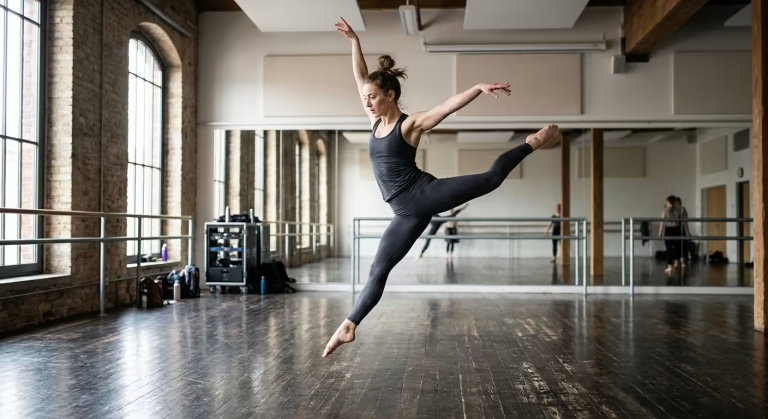
For professional dancers outside the United States, pursuing work opportunities in the U.S. requires more than talent and ambition. To audition, perform, tour, and be paid lawfully, dancers must first secure proper work authorization. For many artists, this is achieved through the O-1B artist visa, designed for individuals with extraordinary ability or achievement in the arts.
At Strategic US Visas, we assist dancers, artists, and other highly skilled professionals in navigating the U.S. immigration system with precision and long-term strategy. Whether you’re based in Canada, the United States, or the UK, our teams in Edmonton, Las Vegas, and London provide O-1B visa counsel for dancers worldwide.
Your first meeting with an immigration lawyer is a critical step in determining whether an O-1B visa for dancers petition is viable now, or whether additional planning is required before filing.
This article explains what that first meeting involves, how dancers should prepare, and how Strategic US Visas helps dancers turn professional achievement into lawful U.S. employment.
The Purpose of the First Legal Consultation
A first consultation should be strategic, not transactional. At Strategic US Visas, the goal of the initial meeting is to assess whether your professional record can support an O-1B petition under U.S. immigration law.
This includes evaluating whether your career reflects sustained professional recognition and whether your experience can be documented in a manner that meets United States Citizenship and Immigration Services standards. In some cases, the appropriate legal advice is to wait, build additional credentials, or reorganize existing evidence before proceeding.
Our objective is not simply to file an application. It is to file a strong, defensible O-1B petition that aligns with both the law and the realities of the dance industry.
Understanding the O-1B Visa for Dancers
The O-1B visa is available to artists who can demonstrate extraordinary ability in dance or achievement in their field. For dancers, this does not require celebrity status. It requires proof of professional distinction shown through consistent high-level work, recognition, and selective engagement.
Applicants must satisfy at least three evidentiary criteria and then pass a final merits review, where USCIS evaluates the totality of the evidence. Many petitions fail not because the dancer lacks talent, but because the evidence is poorly framed or strategically incomplete.
Strategic US Visas focuses on building cases that succeed at both stages.
What Dancers Should Bring to Their First Meeting

You are not expected to arrive with a completed visa package. However, the following materials are helpful for an accurate assessment:
- A current dance résumé.
- A list of professional engagements, including tours, shows, artists, brands, television, or film work.
- Any contracts or proof of paid work.
- Links to performance videos or reels.
- Any media coverage, interviews, reviews, awards, or recognitions.
- Information about agency representation, if applicable.
These materials allow Strategic US Visas to identify strengths, gaps, and next steps.
Key Factors Evaluated by Strategic US Visas
Professional Level and Consistency
USCIS places weight on sustained, paid work in competitive environments such as tours, television, commercial campaigns, and major stage productions. Repeated engagement by the same choreographer or company is particularly persuasive.
Role and Artistic Significance
There is no concept of “just a backup dancer” in immigration law. What matters is whether you were selected for specialized skill, entrusted with responsibility, and contributed meaningfully to the production. Strategic US Visas helps dancers articulate their professional value accurately and confidently.
Letters of Recommendation
O-1B petitions rely on expert opinion letters from individuals who have worked with you and from recognized industry experts who can objectively assess your reputation. These letters must meet specific legal standards and function as evidence, not testimonials.
For dancers working with recognized institutions or choreographers, an AGMA consultation or union-affiliated recommendation can strengthen your petition significantly.
Media Recognition
USCIS does not require celebrity press, but it does require credible published material demonstrating professional recognition. This may include interviews, profiles, reviews, or coverage of productions. Context matters, and Strategic US Visas provides the legal explanation connecting media coverage to immigration requirements.
Agency Representation
For many dancers, U.S. agency representation is an important component of a successful O-1B petition. It demonstrates professional vetting and ongoing employability. Where representation is lacking, Strategic US Visas provides candid guidance on whether to proceed or focus first on securing an agent.
Contracts and Itinerary Planning
The O-1B visa requires a U.S. itinerary or contractual framework. Dance work is project-based, and the law allows flexibility. Strategic US Visas structures compliant itineraries that reflect teaching, choreography, assisting roles, and other ongoing professional engagements.
For those working in choreography, an O-1B for choreographers pathway may also be relevant depending on your professional portfolio.
What Strategic US Visas Will Not Do
Responsible immigration counsel does not guarantee approval, rush filings, or minimize risk. Strategic US Visas does not treat dancers as interchangeable artists or reduce the O-1B process to a checklist. Premature or poorly prepared filings can result in denial and complicate future applications.
Beyond Visa Approval
A successful O-1B petition is not merely a visa grant. It is the foundation for a lawful and sustainable U.S. career. The objective is to ensure dancers can accept professional engagements, be paid legally, build a U.S. work history, and pursue future immigration options without unnecessary barriers.
Strategic US Visas focuses on long-term outcomes, not short-term filings.
Conclusion
Your first meeting with an immigration lawyer is where artistic ambition meets legal strategy. It is an opportunity to assess readiness, clarify direction, and build a plan aligned with U.S. immigration law.
Many dancers who ultimately obtain O-1B visas did not appear ready at the outset. What they had was professional potential, credible experience, and a willingness to approach the process deliberately.
With experienced legal guidance from Strategic US Visas, the path to legally working as a dancer in the United States is demanding, strategic, and achievable.
If you’re ready to explore your options, a strategic assessment is where your first meeting begins.
